Termite Control in Snug Harbor
Track what returns.
Understand what changed.
For termite control in Snug Harbor, start with the signs at your own property. Discuss documenting visible evidence before choosing treatment, then compare the inspection findings and treatment options.
Call (754) 243-8704Tell us the property address and where the signs appeared.

Documenting visible evidence before choosing treatment.
Snug Harbor is an eastern Pompano Beach neighborhood near the city’s waterfront residential areas. Reports of activity in eaves, window trim, or exterior wood should include the exact location of the evidence and whether it has appeared more than once.
Termite Control in Snug Harbor begins with a record of recurring signs
Snug Harbor is identified on the Pompano Beach neighborhood map. When small pellets repeatedly appear beneath a window, trim joint, or cabinet, the most useful first step is to document where they collect and when they return. Take a wider photograph showing the wood above the pile, then a closer image of the material.
Recurring debris deserves assessment, but a photograph alone does not establish species, activity, or the complete source. Keep the finding separate from assumptions about waterfront setting, humidity, or what a neighbor’s home previously needed.
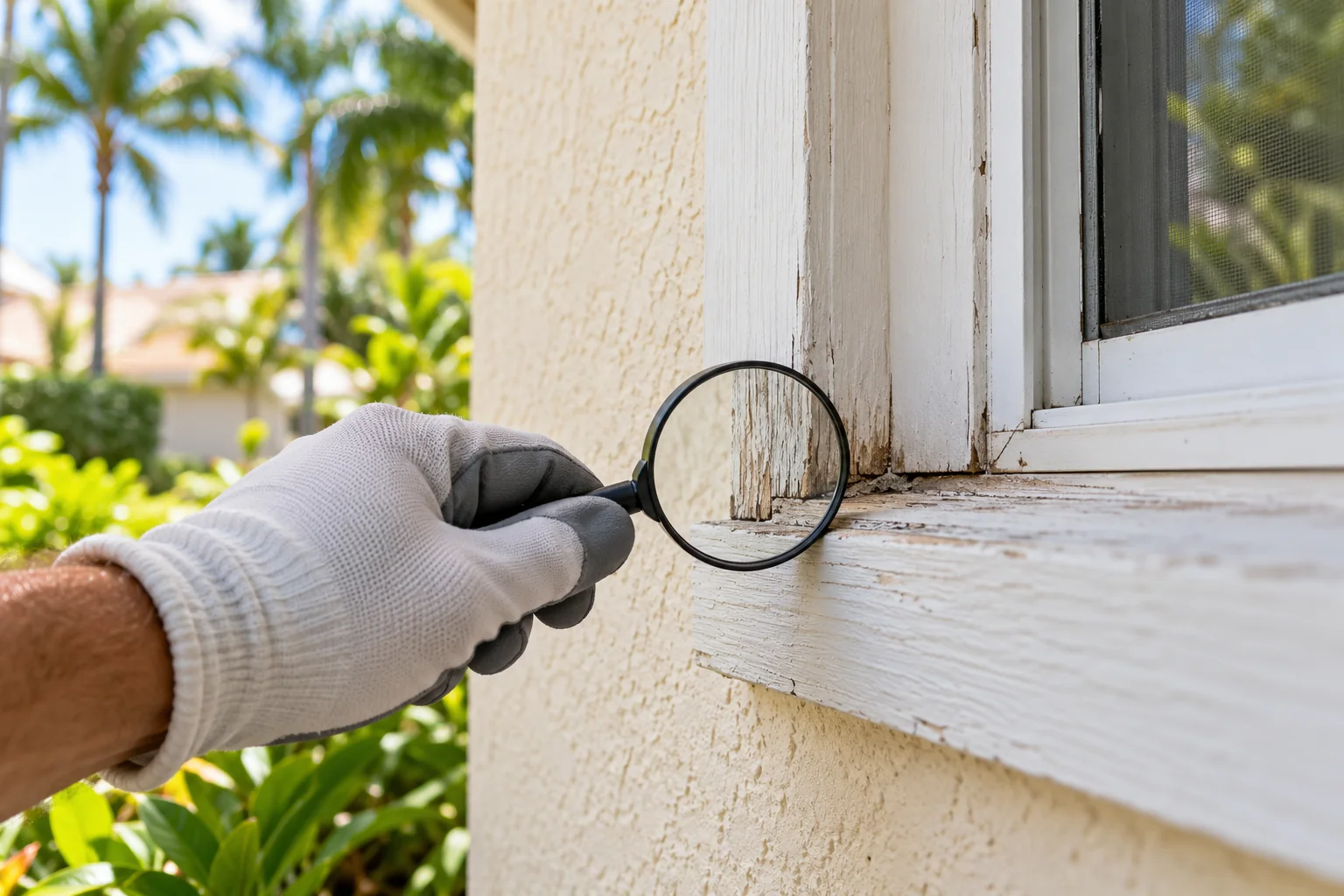
Trace recurring pellets to the accessible trim
Show the inspector the pellet collection point and accessible wood above it. A dated photograph before cleanup can preserve the original context. The inspection should explain the likely source, areas that remain concealed, and what observations to report afterward so recurring findings can be compared with the documented starting condition.
See what a termite inspection coversCompare new observations with earlier work
If the property has been treated, gather the report and mark whether the current finding is in the same place. Note recent painting, cabinet work, window replacement, or other disturbance. Debris can appear after work on an old affected component, so the timing gives the inspector context without settling the diagnosis.
Avoid repeatedly applying household products or covering the opening before the source is assessed. Tell the provider exactly what has already been done, including cleanup and any spot application, so the examination and recommendations account for those changes.
Locate the source above the visible pile
The place where material lands may be lower than the component producing it. Show the inspector accessible trim, shelves, furniture, and roof-space connections above or beside the collection point. Do not open a ceiling or climb into a closed area simply to search before the visit.
Ask the report to distinguish visible evidence from the limits of source tracing. If the suspected wood cannot be reached, discuss what additional access would clarify the concern. A localized treatment proposal should explain its target and what remains outside that scope.
Set a clear baseline for follow-up
After assessment, ask what to photograph, clean, preserve, or report and when a return check is appropriate for the selected method. A dated record is more useful than repeatedly describing the problem as still there. Follow-up terms should explain the included visits and how new findings are handled. Neither an attractive repaired surface nor the absence of a visible pile on one day establishes the condition of every concealed wood component.
Window-trim evidence and a localized work stage.
See the same work area at two stages, with its original materials and existing wear retained.
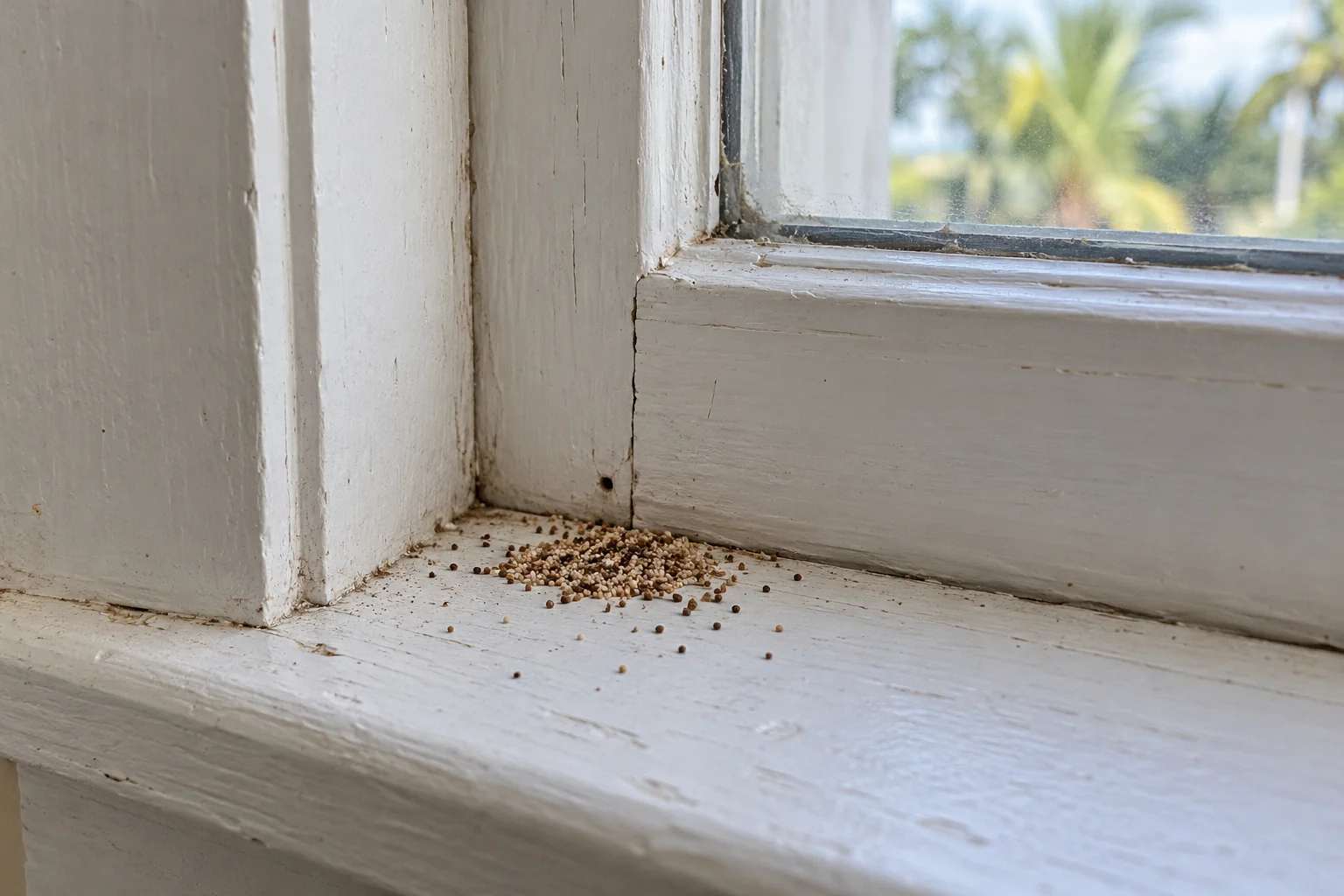
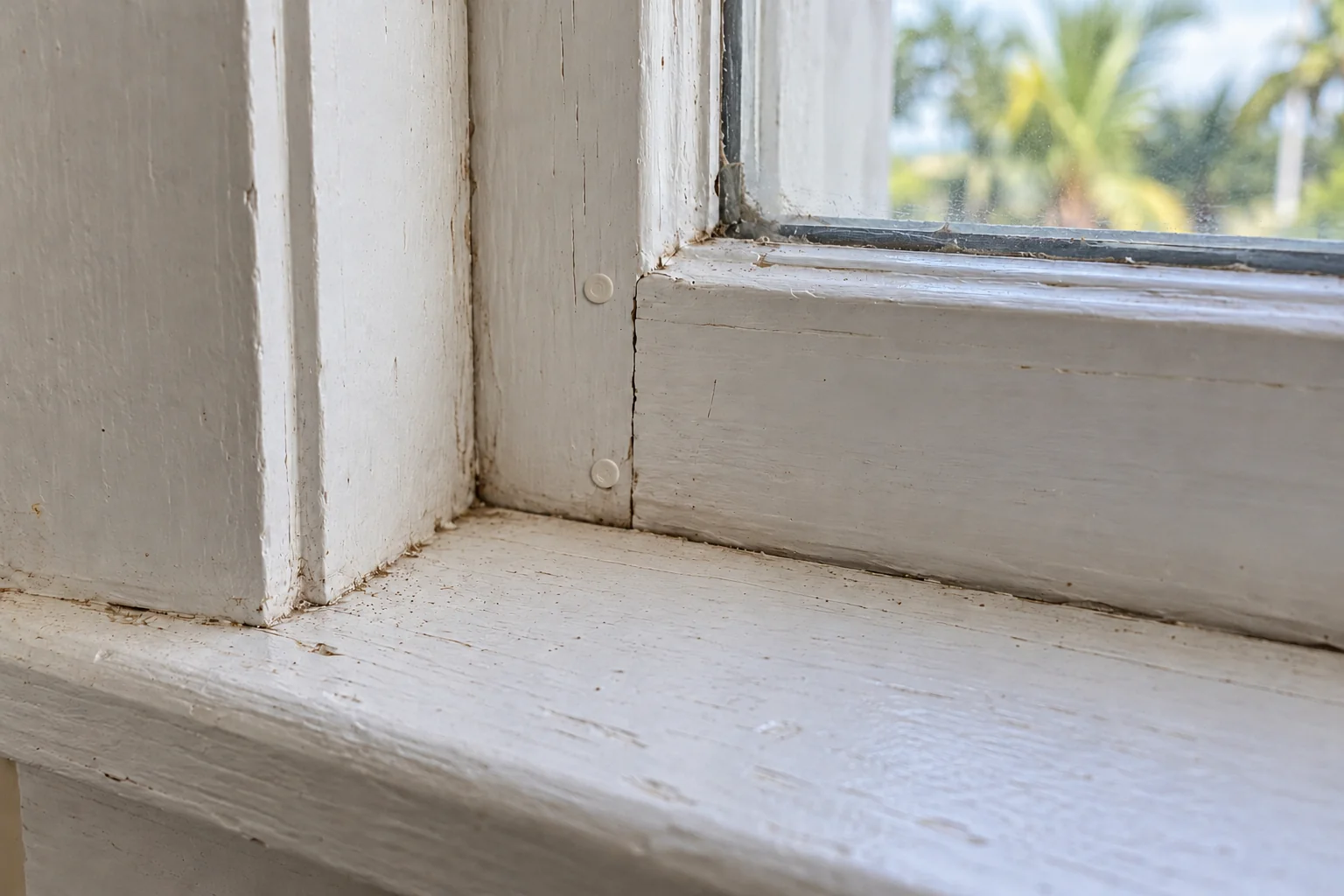
AI-generated illustrations — not an actual customer job. Removing pellets and sealing access points does not establish that all activity is treated. The identified termite, inspection scope, and follow-up still matter. About these images.
Planning the cost of termite control in Snug Harbor.
In Snug Harbor, repeated pellets do not establish how much treatment is needed. A reachable, defined wood finding and a concern extending into inaccessible areas can lead to different proposals. Ask whether source tracing, additional access, return inspections, and any retreatment are included. Compare the actual target areas and limitations in property-specific quotes. Repairing affected trim and restoring finishes should be discussed separately from insect treatment and ongoing agreement charges.
Request a property-specific quote and written coverage terms. Initial work, follow-up, monitoring, and renewal can be separate charges.
Specific termite services in Snug Harbor.
Choose a service for this neighborhood to compare the inspection or treatment scope.
Termite control in Pompano Beach · All 27 local coverage pages
Continue with another local guide.
Questions about termite control in Snug Harbor.
Details to settle for this property and this location.
More termite questionsHow should I document pellets that keep reappearing?
Photograph the collection point and the wood around it, note the date, and record any cleanup or disturbance. Ask the provider whether to preserve a sample. A simple timeline helps the inspector compare observations without relying on memory.
Do pellets after a renovation prove treatment failed?
No single observation proves that. Recent work can disturb material in previously affected wood, while current activity also needs consideration. Share the renovation date, previous report, and exact location so the inspector can assess what the evidence supports.
Why look above the pile instead of only treating the floor?
Material can fall from an elevated component. The inspector needs to locate the likely source and assess surrounding accessible wood. Treating the collection surface would not necessarily reach the wood associated with the finding.
What should a follow-up agreement explain?
Ask which visits are included, what findings to report, how access is arranged, and what retreatment terms apply. Keep these details with the original photographs so later observations can be compared against the documented starting point.
Arrange termite control in Snug Harbor.
Call with your Snug Harbor evidence timeline and earlier treatment records to discuss inspection of recurring pellets and the likely source area.